The Use of Board Games and Card Games in Therapy

Therapy often involves talking, reflecting, and exploring emotions, but sometimes words alone don’t open the door. Although I typically use art therapy to bridge the communication gap, occasionally kids require a little something extra. That’s where board and card games come in. Games like Jenga and Uno can offer unique ways to connect, express, and heal. In therapy, these games become tools that encourage interaction, build trust, and help clients explore feelings in a safe, engaging way.

How Games Help in Therapy
Games create a relaxed environment where clients feel less pressure to perform or explain themselves. This relaxed state encourages openness and honesty. When clients play, they focus on the game, which can reduce anxiety and defensiveness. This makes it easier for therapists to guide conversations naturally.
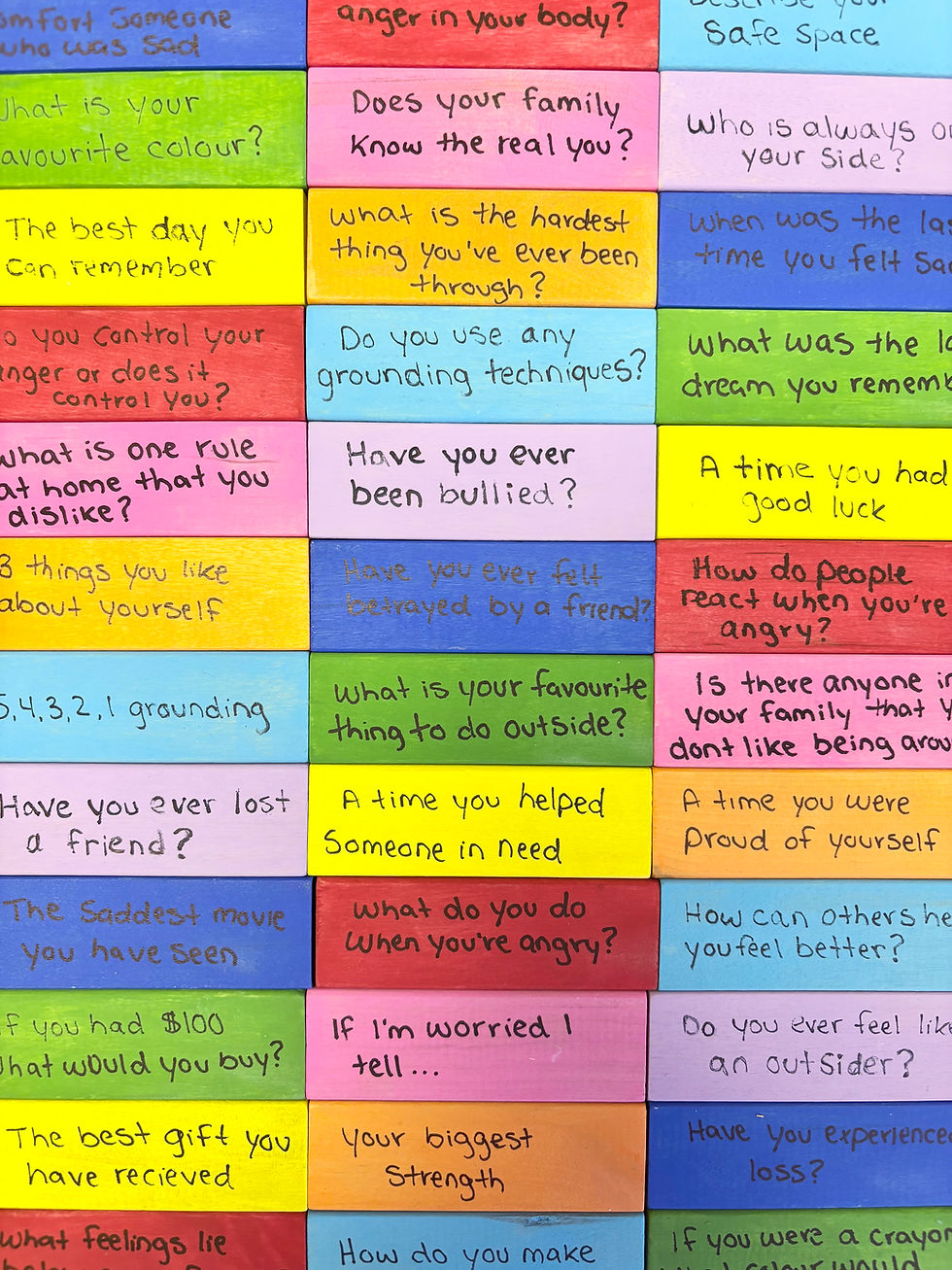
For example, Jenga, a game where players remove blocks from a tower, can be adapted by writing questions or prompts on each block. When a player pulls a block, they answer the question or share a thought related to it. This method encourages reflection and sharing without feeling forced. It also adds an element of surprise and fun, which can lighten the mood and foster connection. The therapist can also decide if they are going to actively participate as well by answering questions -- this can help clients feel more at ease with sharing, and can increase trust, but care needs to be taken to ensure ethics are maintained.
Similarly, Uno cards can be assigned emotional categories based on their colors. Red cards might represent anger, blue cards sadness, green cards hope, and so on. When a player plays a card, they talk about a time they felt that emotion or how they cope with it. This approach helps clients identify and express feelings they might struggle to name otherwise.
Customizing Games for Different Therapeutic Goals
Therapists can tailor these games to fit the needs of their clients and the goals of therapy. Here are some ways customization enhances the therapeutic value:
Writing prompts on Jenga blocks
Prompts can focus on topics like personal strengths, challenges, memories, or future goals. This encourages clients to explore different areas of their lives in a structured but playful way.
Assigning emotions to Uno card colors
This helps clients practice emotional awareness and communication. It also allows therapists to observe how clients relate to different feelings or if they choose to avoid them.
Creating rules that encourage cooperation
Games can be modified to require teamwork, which builds social skills and trust. For example, players might have to share something vulnerable before placing a block or card.
Using games to practice decision-making and problem-solving
The strategic elements of games like Uno or Jenga help clients develop these skills in a low-stakes setting.
These customizations make the games flexible tools that can be used with individuals, couples, families, or groups.

Benefits Beyond Traditional Talk Therapy
Games bring several benefits that traditional talk therapy might not offer:
Nonverbal communication
Some clients find it hard to express themselves with words. Games allow them to communicate through actions, choices, and play.
Building rapport and trust
Playing together breaks down barriers and creates a shared experience that strengthens the therapist-client relationship.
Encouraging mindfulness and presence
Focusing on the game helps clients stay in the moment, which can reduce rumination and stress.
Making therapy enjoyable and motivating
Fun activities increase engagement and willingness to participate, especially for children or clients who resist traditional therapy.
Observing behavior and patterns
Therapists gain insights by watching how clients handle competition, frustration, cooperation, and risk.
Practical Tips for Therapists Using Games
If you’re a therapist interested in incorporating board or card games into your sessions, here are some practical tips:
Choose games that fit your client’s age and interests
Games should feel accessible and enjoyable, not inherently frustrating or boring.
Prepare your customizations in advance
Write prompts or assign emotions clearly to keep the flow smooth.
Explain the purpose of the game
Let clients know how the game relates to therapy goals to increase buy-in.
Be flexible and responsive
Adapt rules or prompts based on how the session unfolds.
Debrief after the game
Discuss what came up during play to deepen understanding and reflection.
Use games as one part of a broader therapy plan
Games complement other techniques but don’t replace them.
Final Thoughts on Therapeutic Games
I have found games to be very helpful with difficult clients -- the one's who struggle to open up, who don't believe in therapy, or who don't understand the behaviours/emotions they're there to address. Not only do the games provide their own inherent purpose, as explored above, but they also help you gain understanding in how the client manages feelings related to frustration, triumph, sportsmanship, and boundaries.


Comments